Ten of Swords: Tarot Card Meaning
Minor Arcana, suit of Swords
Upright keywords
- end of a cycle
- lowest point
- hard chapter closing
- dawn ahead
Reversed keywords
- recovery
- rising again
- lessons learned
- lingering ending
In short
- Upright
- The lowest point of a hard chapter: what dragged on and hurt has ended, and the horizon is already brightening.
- Reversed
- A slow climb after a fall: strength returns, as long as you let what has ended stay in the past.
Ten of Swords: symbolism and imagery
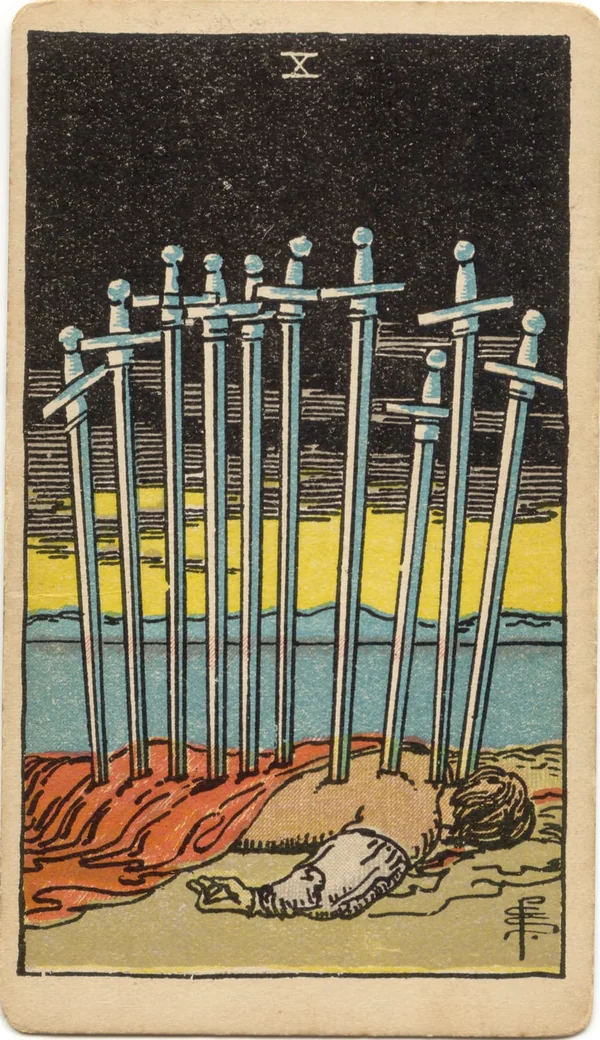
On the Rider–Waite Ten of Swords card, on a deserted shore a figure lies face down, half covered by a red cloak, with ten swords rising above it. The sky is black, yet a broad band of yellow light cuts across it just above the horizon — dawn is breaking. Below lie still, waveless water and a line of distant hills.
- Ten swords
- There are pointedly too many: the image is pushed to its limit on purpose. This is what “everything at once” feels like, and the story goes no further than this.
- The figure on the ground
- There is nowhere lower to go; this is the bottom. But you can push off from the bottom.
- The yellow band of dawn
- Night lingers, but light is breaking through: not endless darkness, but its final hours.
- The calm water
- The storm is over; after long tension comes a quiet in which to catch your breath.
- The folded fingers
- The hand rests on the ground, its fingers folded almost as if in blessing. Even at the lowest point there is room for quiet acceptance.
Ten of Swords upright
The Ten of Swords may be the most alarming-looking card in the deck, so it’s especially important not to read it literally. It isn’t about death, violence or everything being over for good. In tarot, Swords stand for thoughts and words, and ten of them at once stand for all the heaviness that has piled up lately: disappointments, hurtful remarks, anxious thoughts that keep you awake. The card marks the moment a difficult chapter reaches its final line.
There is an unexpected relief in this. Ten is the last number of the suit, so this cycle goes no further. Often it is a sign that the heaviest part is behind you and the climb can begin, even if it is slow.
Look at the horizon: a band of light cuts through the black sky, and the water has gone still. Sometimes the hardest thing is to tell yourself honestly, “This is over.” Not “almost”, not “maybe it will still work out”, but over. Once those words are said, things grow quieter.
The Ten of Swords advises not rushing yourself or pretending everything is fine. Rest, lean on people around you and hold on to simple things: sleep, food, a walk, a chat with a friend. Try not to replay what happened for the hundredth time: each new round seems to add one more sword. Ask yourself what exactly has come to an end and what you no longer have to carry. Dawn doesn’t arrive at the snap of your fingers, but it does arrive.
Ten of Swords reversed
Reversed, the Ten of Swords most often says the worst is behind you. You are slowly getting up: good days return, so does your interest in plans, and old pain returns less often and more quietly. Recovery is rarely a straight line: a bright week may be followed by a sad evening, and that is normal. What matters is noticing how much ground you have already covered.
Sometimes the card has another shade: an ending that drags on. It’s all over, yet your thoughts keep going back there; you reread old messages and wait for the story to rewrite itself. The card gently suggests letting go: not forgetting or forcing yourself to forgive, but no longer living inside what has passed. Start with one evening that belongs only to the present.
Ten of Swords in love: an old story reaches its last page
Upright
In a relationship
Something long outgrown may end in your relationship: a familiar pattern of arguments, a role one of you has played for years, a shared illusion. This doesn’t necessarily mean a break-up; often only the old way of being together leaves. In its place you can build something more honest.
If you’re single
You may still be recovering from a painful chapter, and your heart may not be ready for anything new. Don’t hurry yourself. The card suggests accepting that this story is finished and not looking for a sequel. New encounters will come once you have rested.
Reversed
In a relationship
After a hard period, trust may gradually return: fewer reproaches, more peaceful evenings. But if the same old grievance keeps resurfacing, the wound won’t heal. Agree on what you’re discussing for the last time, then look ahead.
If you’re single
Your ability to trust is returning, and the world seems less cold. If you still feel drawn to checking an ex’s profile or waiting for a sign from them, the card reminds you that you need a new beginning, not a rerun. Give it some room.
Ten of Swords at work: the point where you begin again
Upright
A project may close, fall apart at launch or pass to another team. It hurts, especially after so much effort. Take a breather, then, without beating yourself up, work out what worked and what didn’t. The end of one project is not the end of the road.
Reversed
After a setback you are gradually finding your stride again: new offers appear, along with energy to search and a fresh view of your profession. Don’t grab at everything at once; build on what experience has tested. And if you’re still clinging to a project that stalled long ago, it may be time to let it go.
Ten of Swords and money: a sober view from rock bottom
Upright
With money, the card may reflect a low point: a loss, the end of an income stream, a debt you can no longer ignore. Yet from the very bottom you can see the whole picture. Write the figures down, separate the urgent from the rest and, if needed, consult a specialist. The card doesn’t predict ruin. The old arrangement has simply run its course.
Reversed
Your finances may be slowly levelling out: the debt shrinks, a small cushion appears. Don’t try to win back losses with one risky move: recovery is steadier when it follows a plan. Make money decisions with a calculator in hand, not on a wave of relief.
Ten of Swords and health: time to rebuild your strength
Upright
The card may speak of exhaustion after long stress, when even everyday tasks feel like too much. Rest, sleep and caring people help most now. If the heaviness hasn’t eased after a few weeks, reach out to a doctor or therapist — asking for help is normal, even wise.
Reversed
Strength is returning, but gradually. Don’t overload yourself on the first good day; give body and mind time to recover. If you’re having treatment, don’t drop your doctor’s recommendations on your own.
This isn’t medical advice: for health questions, please see a doctor.
The card’s advice
Upright
The darkest hour comes just before dawn. What are you ready to release to make room for a new beginning?
Reversed
Notice how far you have already come. What small sign of recovery can you spot in your life today?
Ten of Swords: yes or no, upright and reversed
Upright
No
Not in its present form: this path is exhausted, and continuing it would drain your last reserves. Yet this “no” is not a verdict. A closed door frees room for another decision, which you’ll reach once you’ve rested.
Reversed
Likely yes
Likely yes when you’re asking about recovery or a fresh start after a difficult period; the climb will be gradual. But if you’re asking whether something that has ended will come back, the card advises letting it go.
Ten of Swords as your card of the day
Ten of Swords in spread positions
In the past position
A hard period (a disappointment, a loss or the end of something important) lies behind you; its echoes can still be heard.
As an obstacle
What gets in the way is returning again and again to what has ended and picturing the bleakest outcome.
As advice
Accept that this stage is complete, let yourself rest and lean on those close to you.
As the outcome
The situation may reach a natural ending, after which breathing gets easier and room opens for a new beginning.
Example
Someone who has twice missed the cut for medical school lays out three cards: “what has ended”, “what is beginning”, “what to lean on”. The Ten of Swords in the first position doesn’t mean lifelong failure; it marks the end of an exhausting stretch of cramming and self-reproach. Now they can calmly choose: prepare differently or consider a related profession.
Ten of Swords: combinations with other cards
A brief look at what two cards mean side by side in one spread (in the upright position). Select a card to open its meaning.
With the Major Arcana
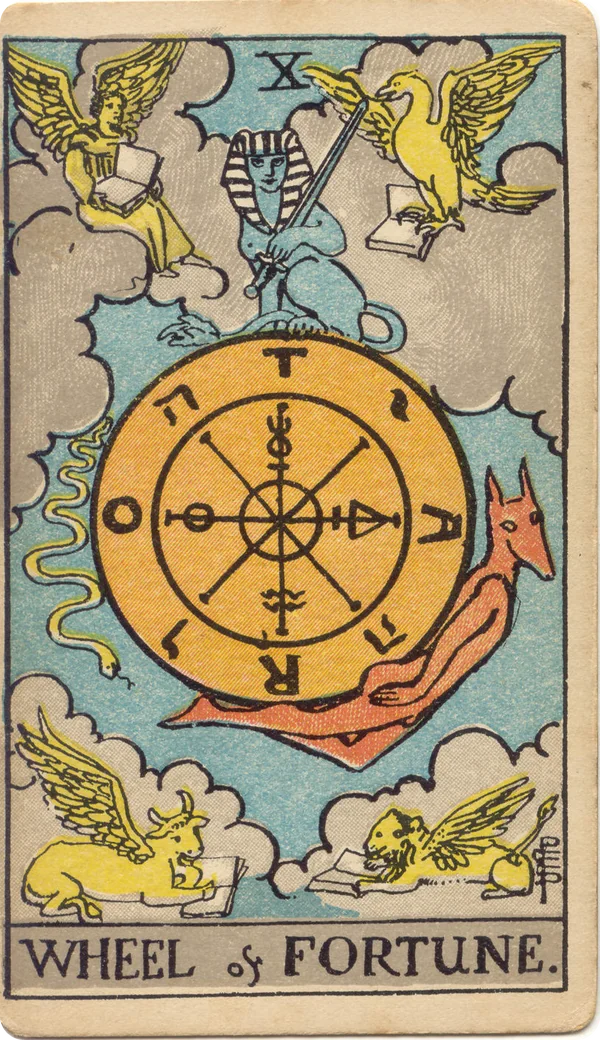
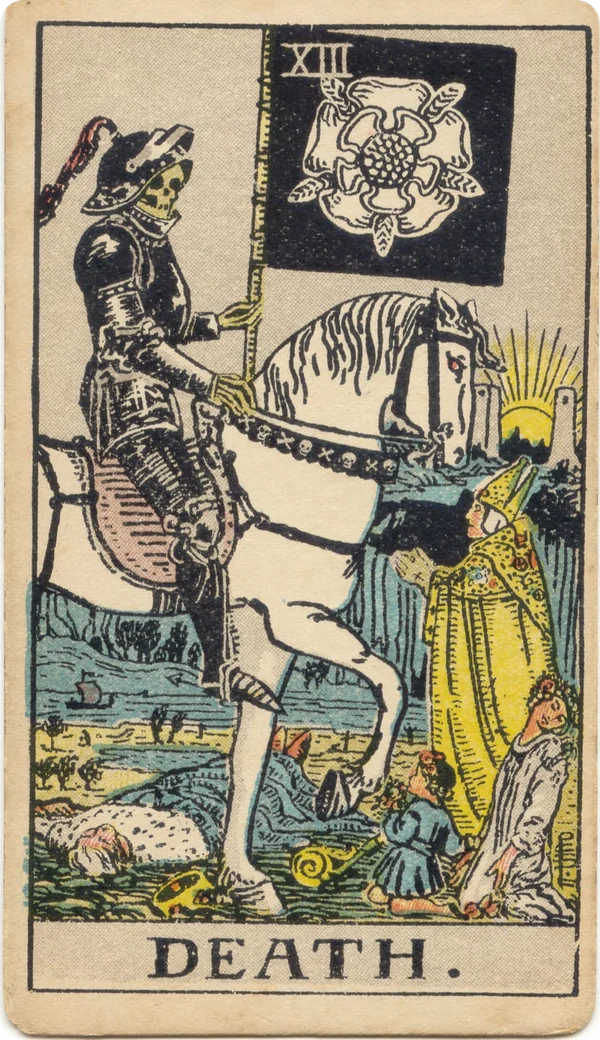
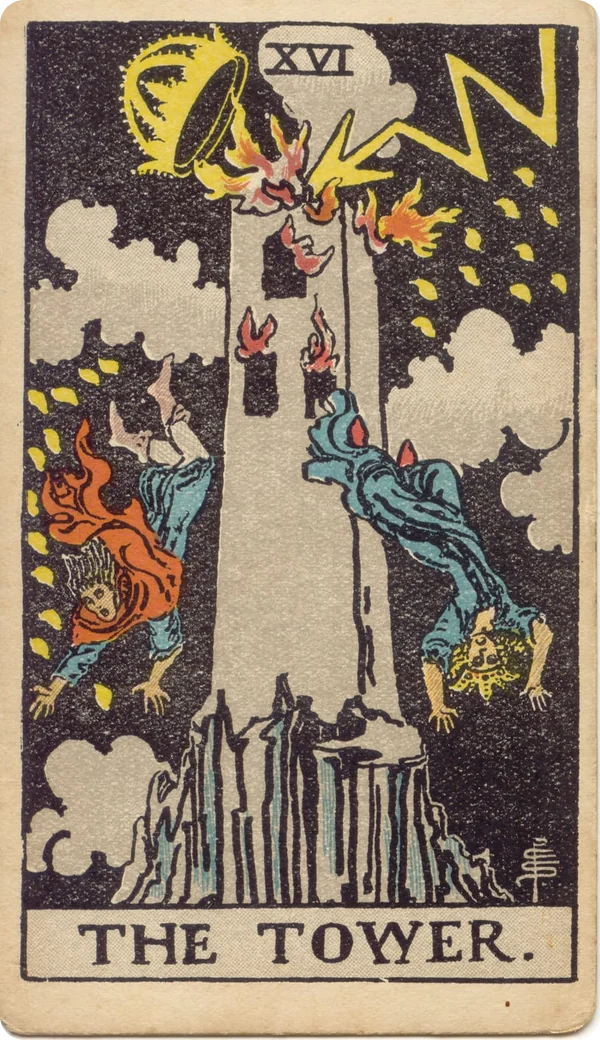
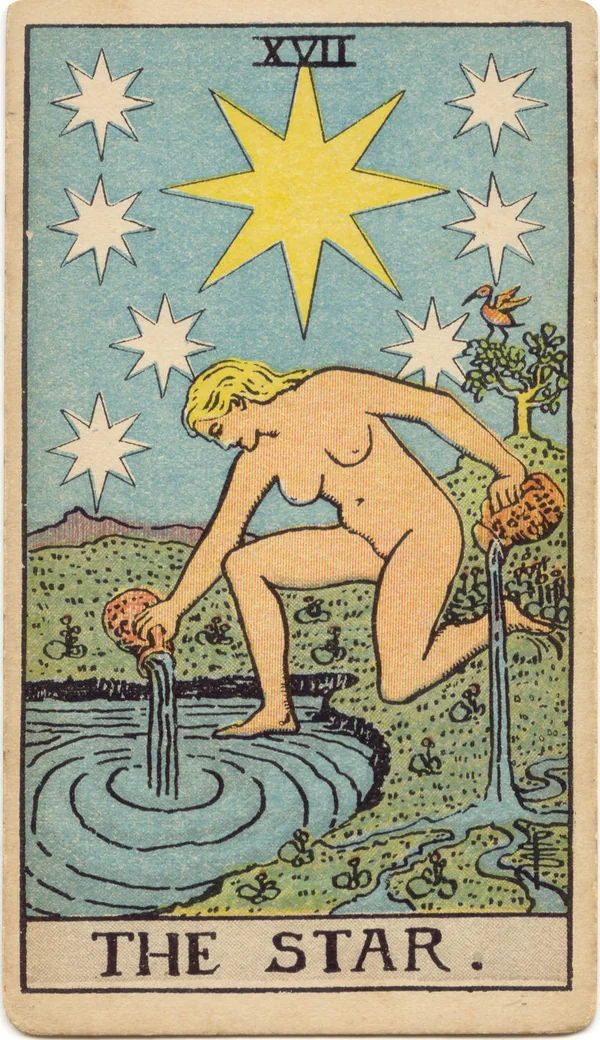
With the Swords
Did these cards land side by side in your spread? Enter the whole spread and get an interpretation of each card in its position.
Interpret my spreadCorrespondences
- Element
- Air
- Astrology
- the Sun in Gemini
- Number
- 10: end of a cycle, threshold of a new round
- Suit
- Swords: thoughts, words, conflict, truth and decisions
Frequently asked questions
What does the Ten of Swords mean in tarot?
It’s the card of a hard chapter ending: the lowest point, after which the climb begins. It acknowledges pain and fatigue but shows dawn on the horizon: what has run its course can be released.
What does the reversed Ten of Swords mean?
Most often, recovery: the worst is over and strength returns gradually. Sometimes it’s a lingering ending, when someone clings to what is already finished.
What does the Ten of Swords mean in relationships and as feelings?
The end of an old pattern: a painful story, recurring arguments, illusions. It can mean a break-up, but not necessarily: sometimes a couple simply rebuilds their bond on more honest terms. As feelings, it suggests exhaustion after something painful: someone may feel the story has reached its end.
Is the Ten of Swords a yes or no card?
Upright, it’s a no: in the form you had in mind, this path is exhausted. Reversed, it’s a cautious yes, especially when the question concerns recovery and a fresh start.
Does the Ten of Swords predict disaster or death?
No. It’s an allegory, not a prediction: the card doesn’t speak of anyone’s death, illness or misfortune. Its image is deliberately dramatic to show a limit: the moment a hard chapter ends and the climb begins.
Laid out the cards with your own deck?
Enter your spread and get an interpretation of each card in its position, plus an AI reading of the whole spread.
Interpret my spreadFrom the blog: How to read tarot cards · Tarot questions to ask
Related cards
The same card in the other suits, plus the Major Arcana card with the same number.